Ex-BioWare Executive Reveals Anthem's Collapse
Author : Penelope
Dec 11,2025
Last month, Electronic Arts confirmed that BioWare's Anthem will be shut down on January 12, 2026. Following a turbulent six-year lifespan, executive producer Mark Darrah has now provided a detailed account of the game's development and the missteps that occurred along the way.
In the first installment of a multi-part video series, Darrah dedicates an hour to explaining Anthem’s development timeline—from his perspective—from 2011 until he became executive producer in 2017. While he acknowledges his view isn't entirely exhaustive, since he wasn't directly involved throughout much of that period, his senior role at BioWare gave him unique insight into the project’s progression.
Although Darrah only served as executive producer for the final 16 months of development, he begins the video by taking responsibility for Anthem’s shortcomings:
“Parts of this presentation might appear as though I'm deflecting responsibility, but ultimately, the accountability for this game falls primarily on me,” he explains. “There is a private list of individuals I believe also share the blame—nearly all of whom are more senior than I am. The team worked incredibly hard, delivered exceptional elements, and even today, Anthem includes aspects that are truly remarkable.”
Darrah then outlines the first six years of development, citing numerous challenges Anthem encountered. He describes how EA executives at the time believed single-player games were declining in appeal, creating a difficult position for BioWare—a studio historically built around single-player experiences. According to Darrah, then-BioWare lead Casey Hudson's initial vision for Anthem was to merge BioWare's narrative expertise with a live service, always-online model. Hudson proposed an entirely new business model, which helped generate internal momentum among EA leadership. As Darrah recalls the sentiment: “What if a BioWare title could match the commercial success of FIFA?”
But early on, Anthem faced staffing issues. BioWare employees were shown an executive-level presentation detailing the live-service direction, which alienated many developers. Additionally, as Dragon Age: Inquisition wrapped up, team members were repeatedly reassigned to Mass Effect: Andromeda, leaving Anthem without the workforce Hudson had envisioned.
Another major challenge, Darrah notes, was the shifting vision for the game. While the initial goal was complete originality, he explains how hard it was to convey that vision without familiar reference points for developers or executives. Over time, Anthem began to resemble established titles like Destiny and Borderlands.
An early design document stated that Anthem would include six javelins. As Darrah put it, "That number was basically pulled out of thin air."
Secrecy also hampered progress. While Darrah recognizes the need to prevent leaks, he believes some internal transparency is beneficial. Early on, Hudson selectively shared aspects of the project across the studio, building enthusiasm and gathering input. But after Hudson's departure, the information flow stopped, and the project became extremely guarded. This made it easier to overlook issues and fostered groupthink within a small, insulated team.
Darrah shares a revealing story about setting overly specific expectations too early, as with the game’s original plan for six javelins:
An early design document declared Anthem would have six javelins. Where did that figure come from? It was essentially invented. To be more accurate, the reasoning went: we'll have light, medium, and heavy javelins, so let’s make two of each type. Unfortunately, this arbitrary number was presented to EA executives in early 2017 as a firm feature.
Shortly after that presentation, the team concluded six javelins weren't feasible, primarily because they couldn't meaningfully differentiate six distinct types, nor did they have enough time to design and polish six different gameplay archetypes. So the team had to backtrack, announcing only four javelins at launch. Despite the original six being completely unsupported, this revision created immense pressure and anxiety among executives.
I suspect this change from six to four javelins was among the triggers for the major project overhaul in 2017—an upheaval that ended with me taking over. Even though the initial target was arbitrary, reducing it was perceived as a sign the project was faltering.
Darrah adds that one canceled javelin was intended to be a tank-like, support-oriented paladin, while the other—a medium-class variant—was so vaguely defined he can’t even recall its concept.
Later in the video, Darrah mentions EA’s 2016 initiative pushing all major franchises toward becoming “billion-dollar brands.” Under that plan, Dragon Age would have needed a new release every two years. This mandate cemented Anthem’s identity as a live service title.
He also recalls three separate occasions where he advised leadership to delay Anthem’s launch, giving the team more time to refine the game, ship Andromeda first, and then transition that team over to complete Anthem. All three requests, he says, were denied.
You can view Darrah’s full video here. He confirms at least a second part—and possibly a third—is on the way.
Anthem launched in February 2019 to mixed reviews. Our review scored it 6.5/10, criticizing its repetitive grind, lack of polish and variety, and disjointed storytelling. The game failed to meet EA’s sales expectations, leading to the end of active development in 2021. EA will fully shut down Anthem on January 12, 2026.
Latest Articles
Japan Gaming Stocks Dive on Trump Tariffs
Japanese video game companies experienced a significant stock market downturn following President Donald Trump's announcement of new tariffs.White House officials indicated targeted reciprocal tariffs on approximately 60 nations deemed "worst offende
It And Annabelle Writer-Producer Secures Screen Rights For The Medium: 'Anything Bloober Develops Is Going To Push Horror Forward In Unique And Terrifying Ways'
It and Annabelle writer-producer Gary Dauberman is preparing to bring Bloober Team’s The Medium to the big screen.As reported by Hollywood Reporter, Dauberman has secured the film rights to Bloober's intense horror title, though a director and scree
Sinners Hits $350M, Released Digitally
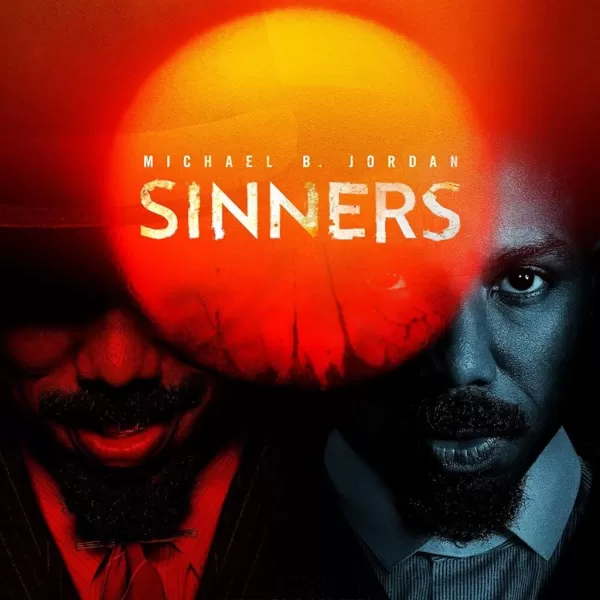
Director Ryan Coogler continues his winning streak. As Eric Goldman notes in his IGN review: "Having mastered boxing dramas and superhero films, Coogler now conquers horror with the vampire period piece Sinners. And unsurprisingly, he delivers anothe

Monument Valley 3 Documentary Reveals The Making Of
Ustwo Games has released a short documentary, "Building the Impossible: The Making of Monument Valley 3." The game arrived on PC and consoles last week, and this new video offers a deeper insight into the creative process behind the latest puzzle-adv
Mindset GO! Launches New Venn Diagram Puzzle Game
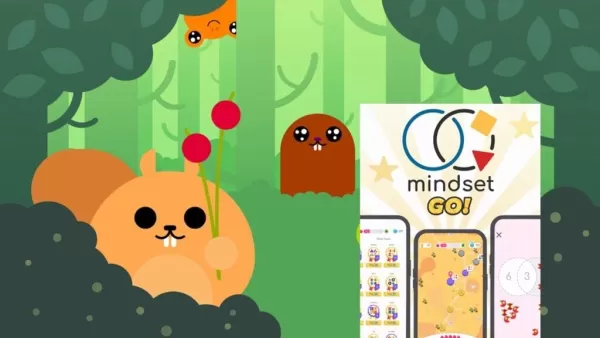
Mindset GO! elevates the smart-casual puzzle genre to a new level. Now available on Android, iOS, and the web, it merges keen observation with logical reasoning through a unique gameplay mechanic. Developed by Magicave, the game features a system rem
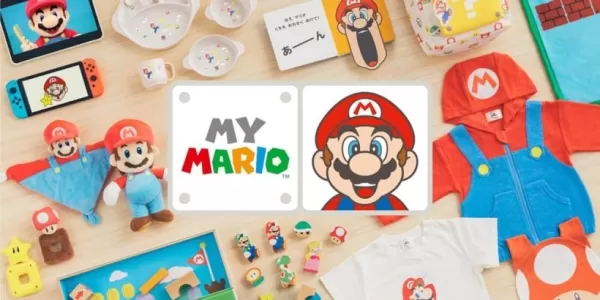
Hello, Mario! is a new made-for-kids app as part of Nintendo\'s big Mario push
Hello, Mario! is Nintendo’s latest venture into the Mario lifestyle experience.
It’s part of the new My Mario product line.
Gently poke, prod, or pinch Mario’s face—just like in the N64 version—to trigger a range of playful reactions. Those who grew
Latest Games

Secret Forest
Card丨28.10M


Lucky Devil
Card丨82.40M


Southern Poker
Card丨2.00M
Gabbys DollHouse Tiles Hop
Music丨66.80M








Top News
MORE +
01
02-03
Roblox: Anime Adventures Codes (January 2025)
Anime Adventures Codes: A Comprehensive Guide to Free Gems and Rewards
This guide provides an up-to-date list of working and expired Anime Adventures codes in Roblox. Redeeming these codes grants valuable in-game gems and other rewards, giving you a head start in your adventure.
Updated January 5,
02
05-26
Enhance Your MU Immortal Experience with BlueStacks Features
MU Immortal captures the essence of classic MMORPG gameplay that fans adore—leveling up, enhancing stats, and crafting your ideal character. Designed primarily for mobile, the game truly shines when played on a PC using BlueStacks, thanks to an array of tools that streamline and enhance your gaming
03
05-16
"Clair Obscur: Expedition 33 Hits 1 Million Sales in 3 Days"
Clair Obscur: Expedition 33 has taken the gaming world by storm, achieving a phenomenal opening weekend by selling over 1 million copies just three days after its launch. This remarkable feat cements its status as the highest player-rated game of early 2025. Dive deeper into the journey of this grou
04
04-21
Roblox Anime Genesis: January 2025 Codes
Dive into the thrilling world of Anime Genesis, a dynamic tower defense game on Roblox where you assemble a squad of your favorite anime characters to fend off menacing monsters. Whether you're tackling levels solo or teaming up with friends, you'll earn gems that you can use to summon new heroes, e
05
01-20
New DLC and Preorder for FANTASIAN
FANTASIAN Neo Dimension: DLC and Pre-order Information
While anticipation for extra content is high, a FANTASIAN Neo Dimension DLC or story expansion is unlikely. Mistwalker head Hironobu Sakaguchi has stated his preference against sequels, aiming for complete, self-contained gaming experiences.
Topics
More +