
AMD Radeon RX 9070 XT Review
Author : Sadie
Mar 16,2025
For several generations, AMD has strived to match Nvidia's high-end performance. With the AMD Radeon RX 9070 XT, however, Team Red strategically shifts focus. Instead of directly challenging the RTX 5090 in the ultra-high-end market, they've aimed to create the best graphics card for the majority of gamers—a goal they've undeniably achieved.
Priced at $599, the AMD Radeon RX 9070 XT rivals the $749 GeForce RTX 5070 Ti, immediately establishing itself as a top contender. AMD further enhances its appeal with the inclusion of FSR 4, marking the first time AI upscaling is integrated into an AMD graphics card. This makes it the ideal choice for 4K gaming, especially for those unwilling to spend the $1,999 price tag of the RTX 5090.
Purchasing Guide
The AMD Radeon RX 9070 XT launched on March 6th, starting at $599. Note that prices may vary due to third-party custom models. Aim for a price under $699 if possible.
AMD Radeon RX 9070 XT – Photos

Specs and Features
Built on the RDNA 4 architecture, the AMD Radeon RX 9070 XT boasts improved shader cores, but the real highlights are its new RT and AI Accelerators. These AI Accelerators power FidelityFX Super Resolution 4 (FSR 4), bringing AI upscaling to AMD for the first time. While FSR 4 doesn't always offer higher frame rates than FSR 3.1, it significantly enhances image accuracy and quality. Conveniently, a toggle in Adrenalin software allows users to disable FSR 4 if framerate is prioritized.
Beyond AI upscaling, AMD has significantly improved its shader cores, boosting per-core performance. Despite having 64 Compute Units (compared to 84 in the RX 7900 XT), the RX 9070 XT delivers a substantial generational leap at a lower price point. Each Compute Unit features 64 Streaming Multiprocessors (SMs), totaling 4,096, along with 64 ray accelerators and 128 AI accelerators.
However, the RX 9070 XT has less memory than its predecessor—16GB GDDR6 on a 256-bit bus, compared to the RX 7900 XT's 20GB GDDR6 on a 320-bit bus. This reduces capacity and bandwidth, but remains sufficient for most 4K gaming. The continued use of GDDR6, however, is a minor drawback.
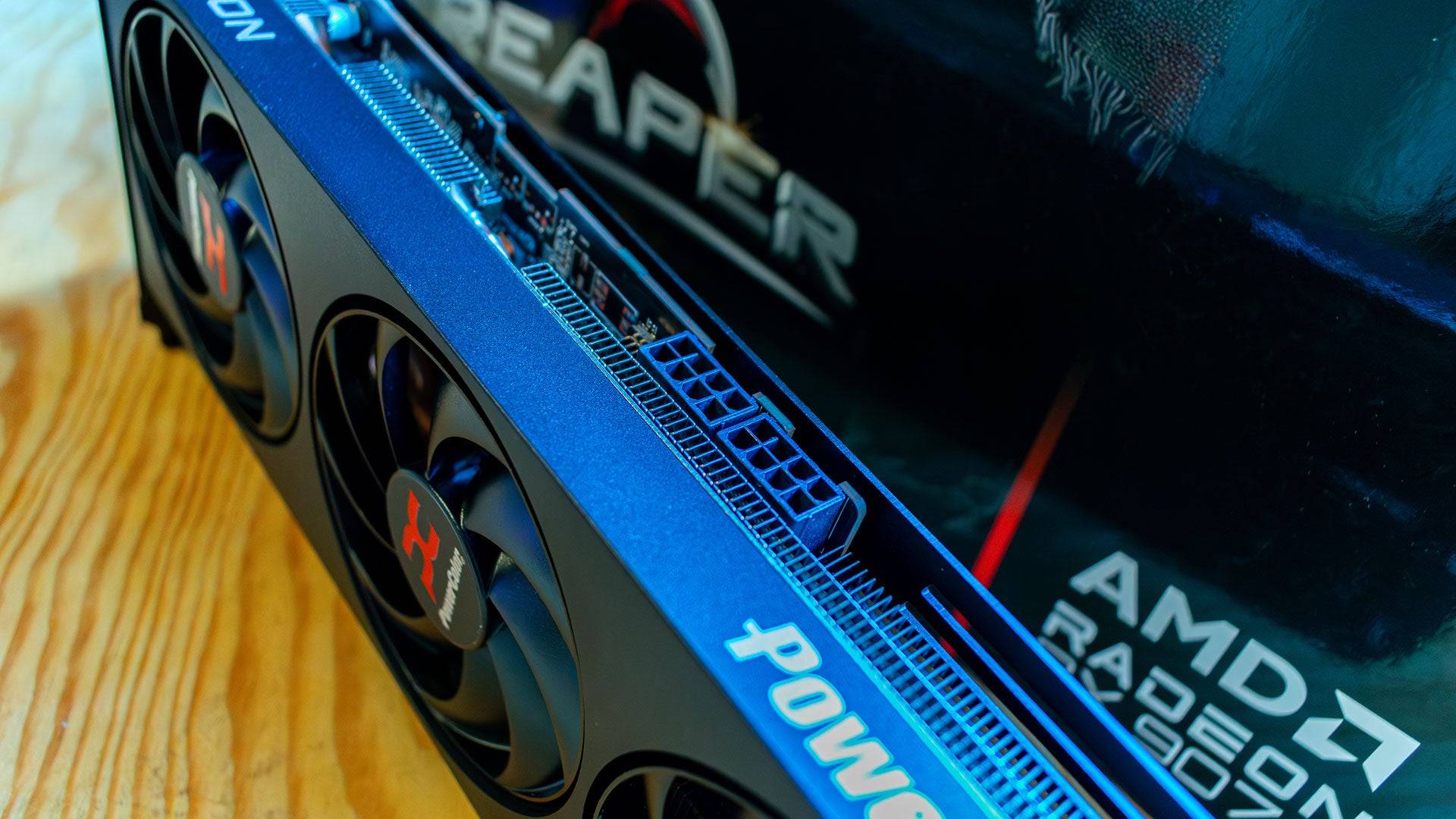
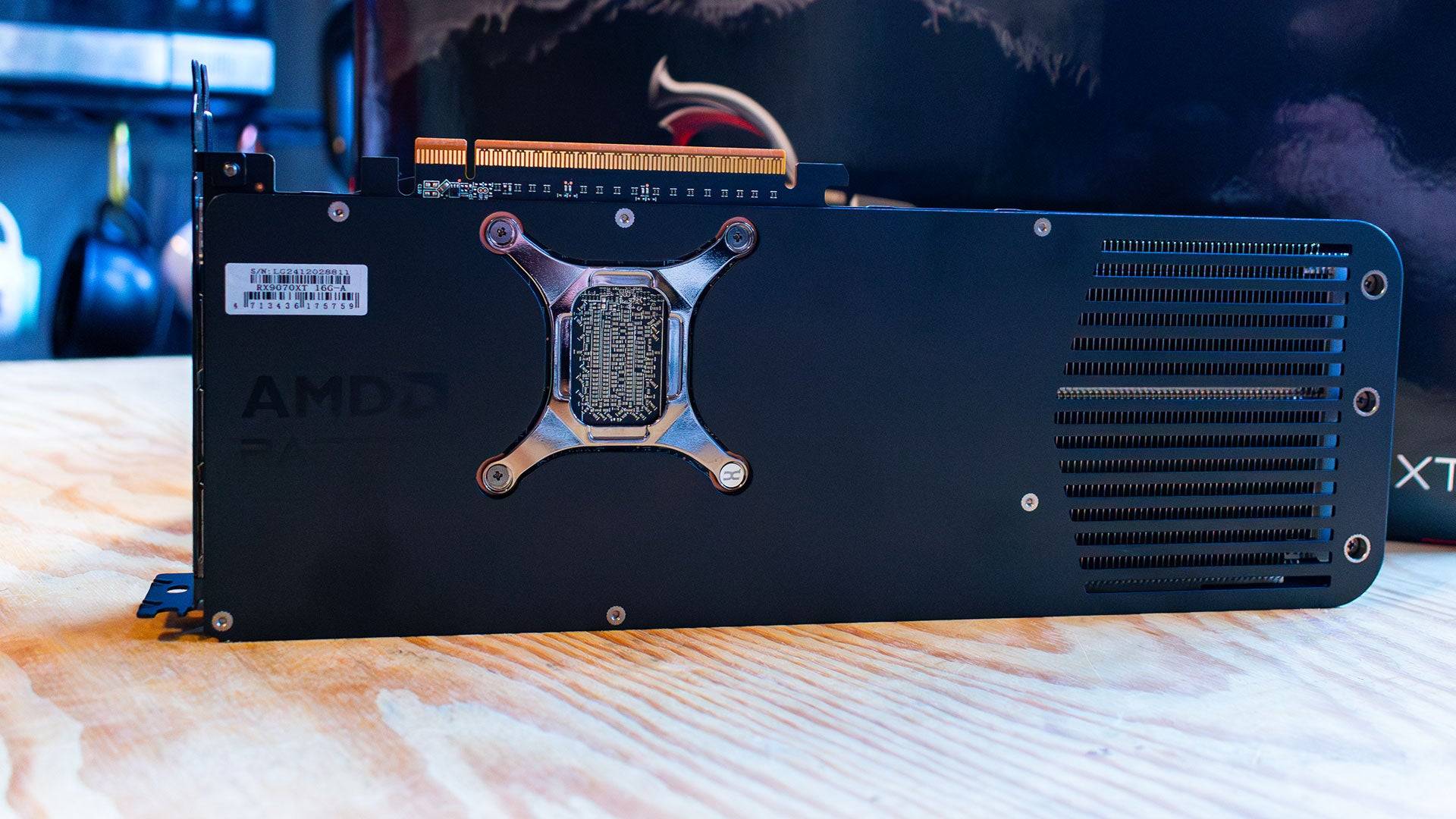
While the new architecture is more efficient, the RX 9070 XT has a slightly higher power budget (304W) than the 7900 XT (300W). This is a typical power draw for modern graphics cards, making cooling relatively straightforward. Unlike previous generations, AMD isn't releasing a reference design; users must rely on third-party manufacturers. My review unit, the Powercolor Radeon RX 9070 XT Reaper, maintained a temperature of 72°C during testing despite its compact triple-fan cooler.
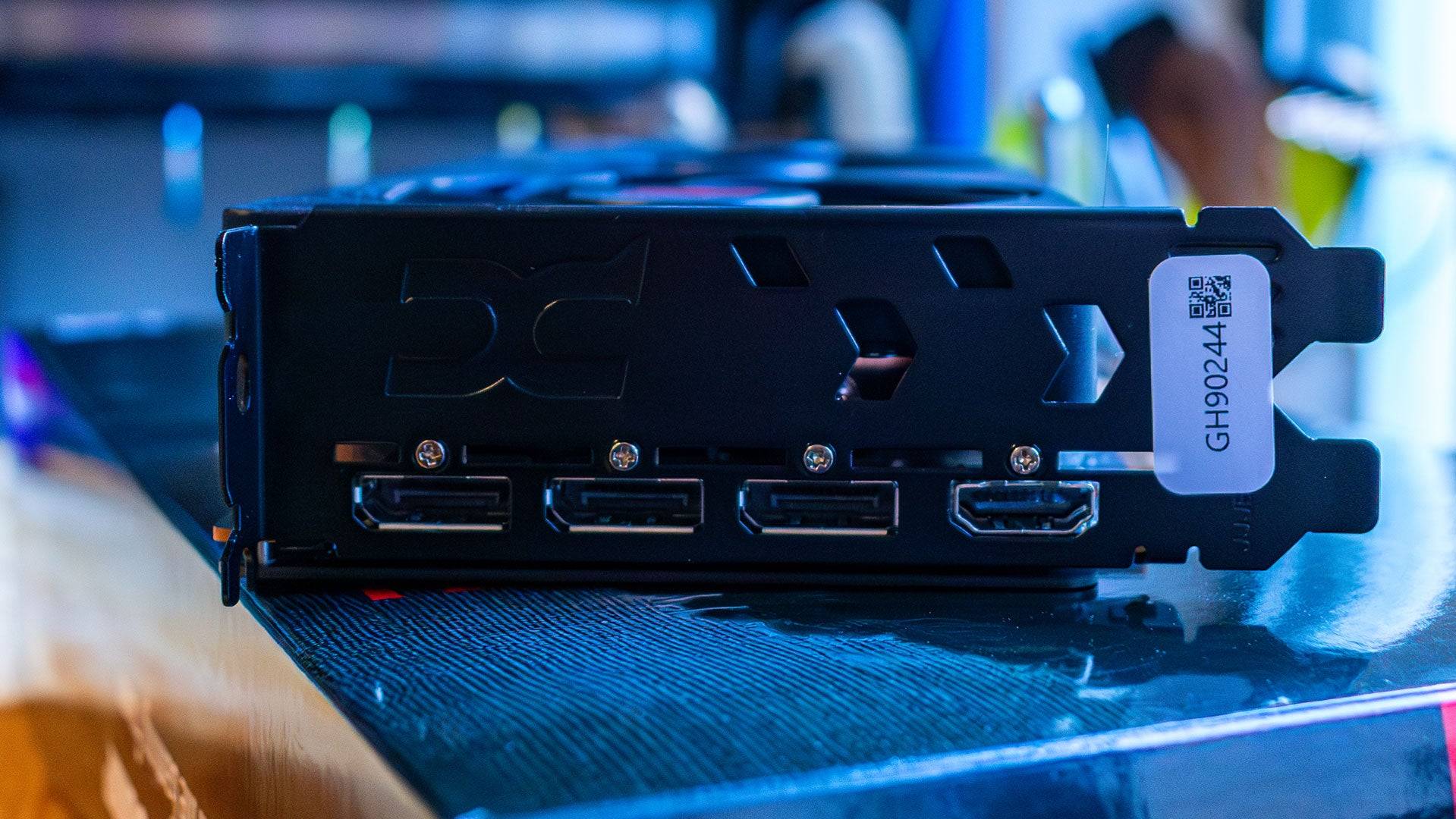
The Radeon RX 9070 XT uses two standard 8-pin PCI-E power connectors, simplifying upgrades for most users with a recommended 700W power supply. Connectivity includes three DisplayPort 2.1a and one HDMI 2.1b ports; a USB-C port would have been a welcome addition.
FSR 4
AMD has long needed an AI upscaling solution to rival DLSS. While previous FSR versions offered performance gains, they suffered from ghosting and blurriness. The Radeon RX 9070 XT addresses this with FSR 4.
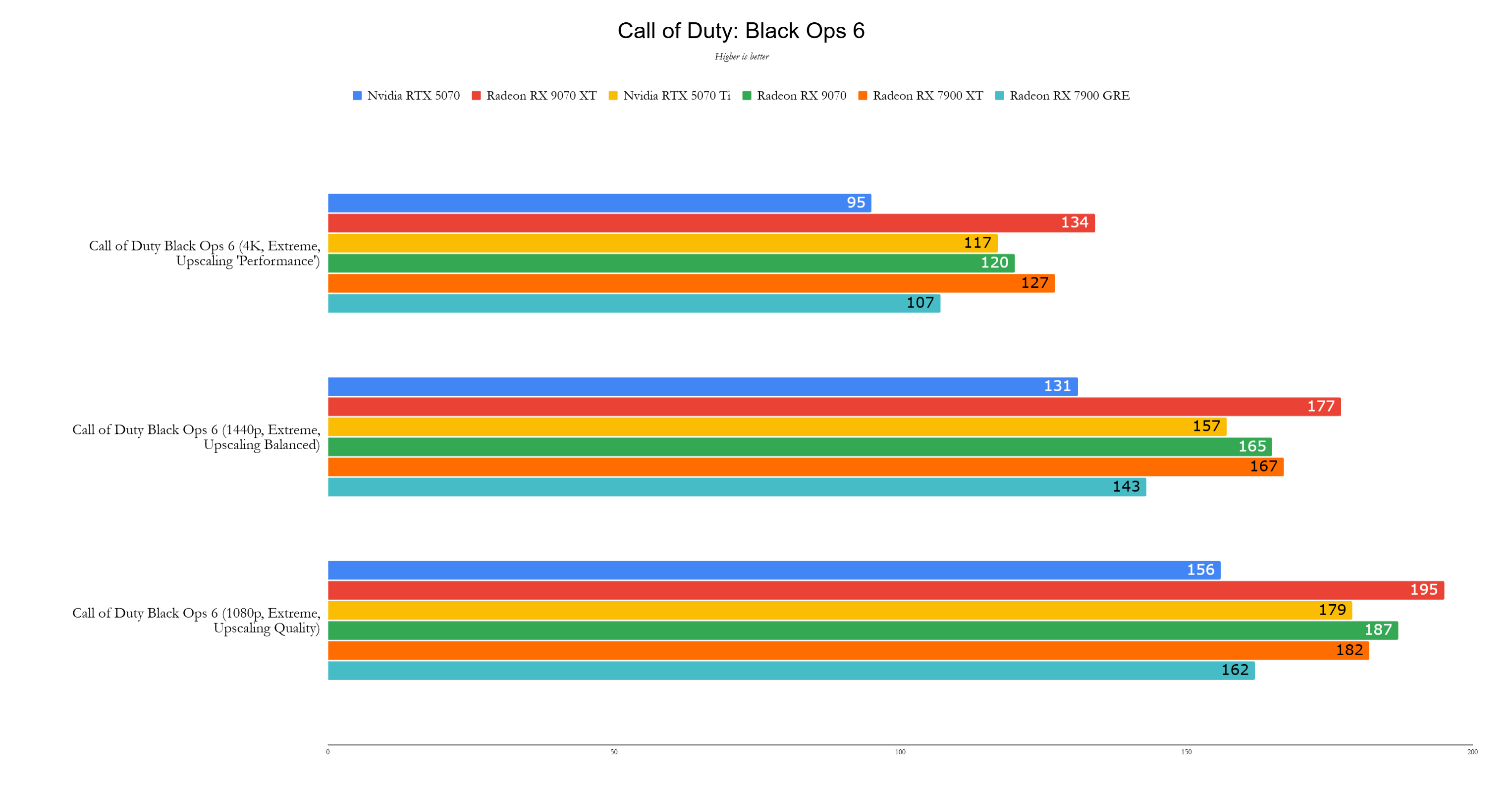
Similar to DLSS, FSR 4 uses AI accelerators to analyze previous frames and game engine data to upscale lower-resolution images. The result is superior to FSR 3's temporal upscaling, but comes with a performance penalty. In *Call of Duty: Black Ops 6* at 4K with FSR 3.1, I achieved 134 fps, dropping to 121 fps with FSR 4 (a 10% decrease) but with noticeably better image quality. *Monster Hunter World* showed a 20% drop in frame rate when switching to FSR 4.
This performance hit is expected due to the increased computational demands of AI upscaling. The improved image quality may outweigh the performance loss for single-player games where visuals are prioritized. Fortunately, FSR 4 is optional and can be disabled in Adrenalin software.
AMD Radeon RX 9070 XT & 9070 – Benchmarks
Performance
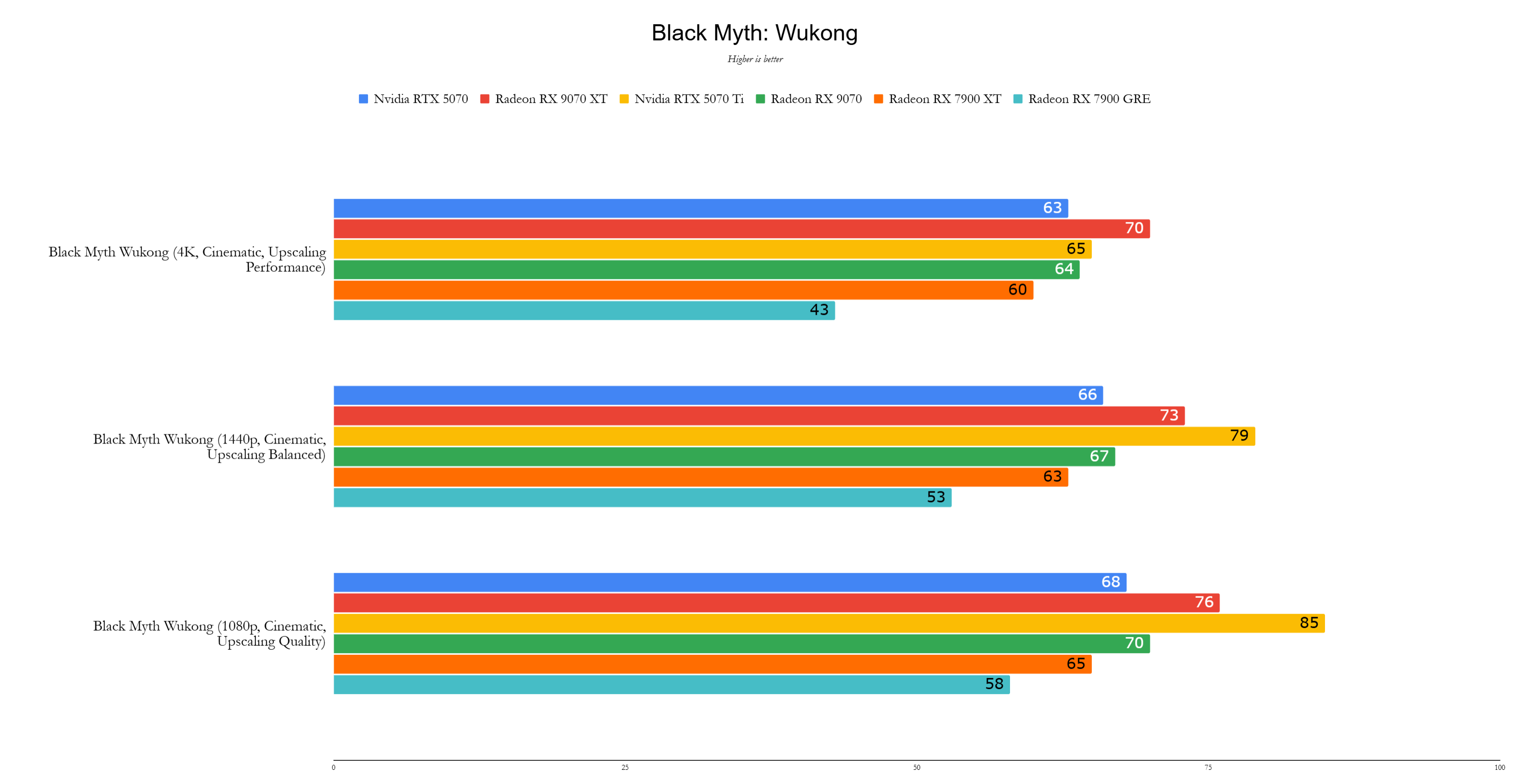
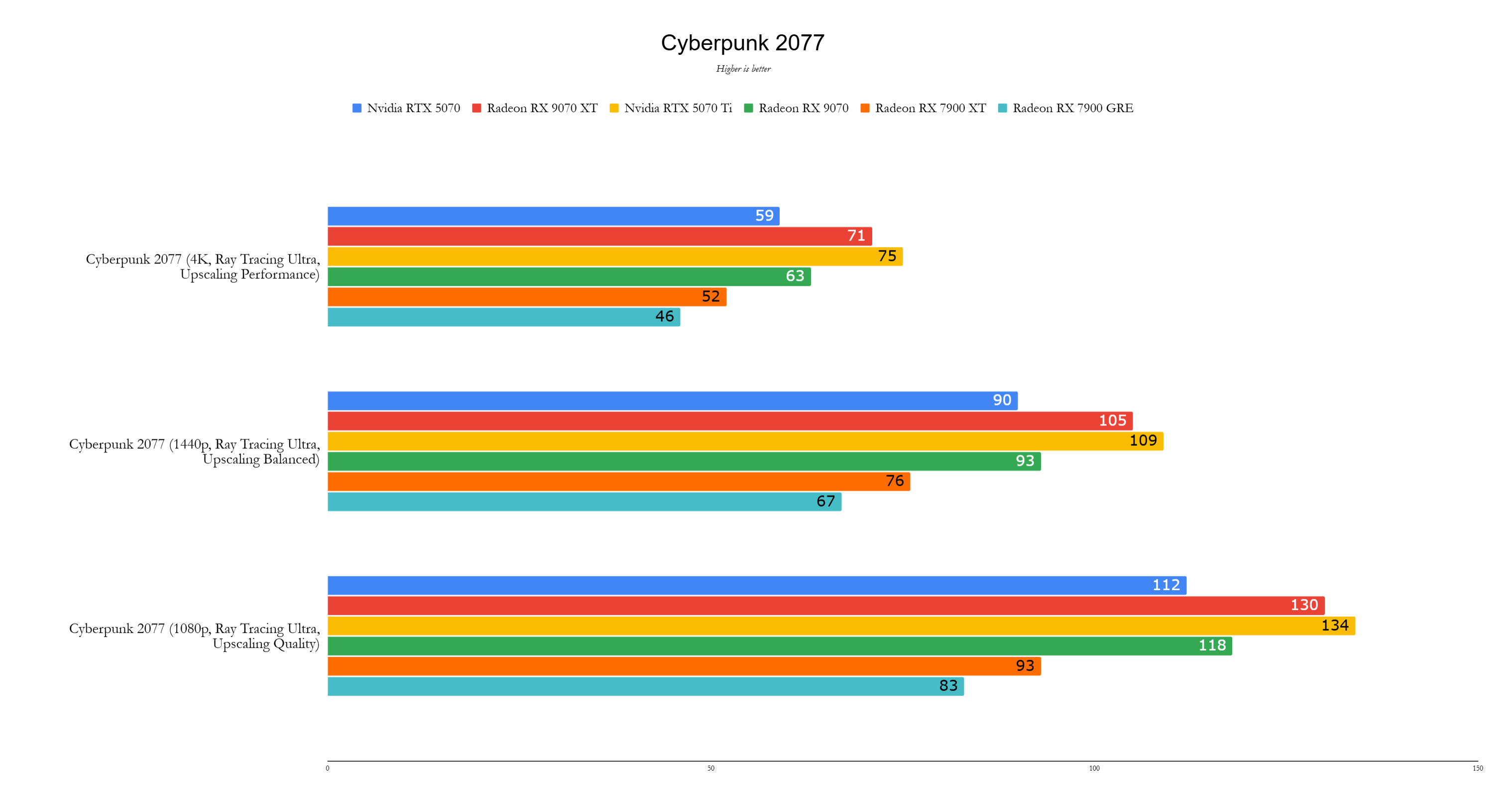
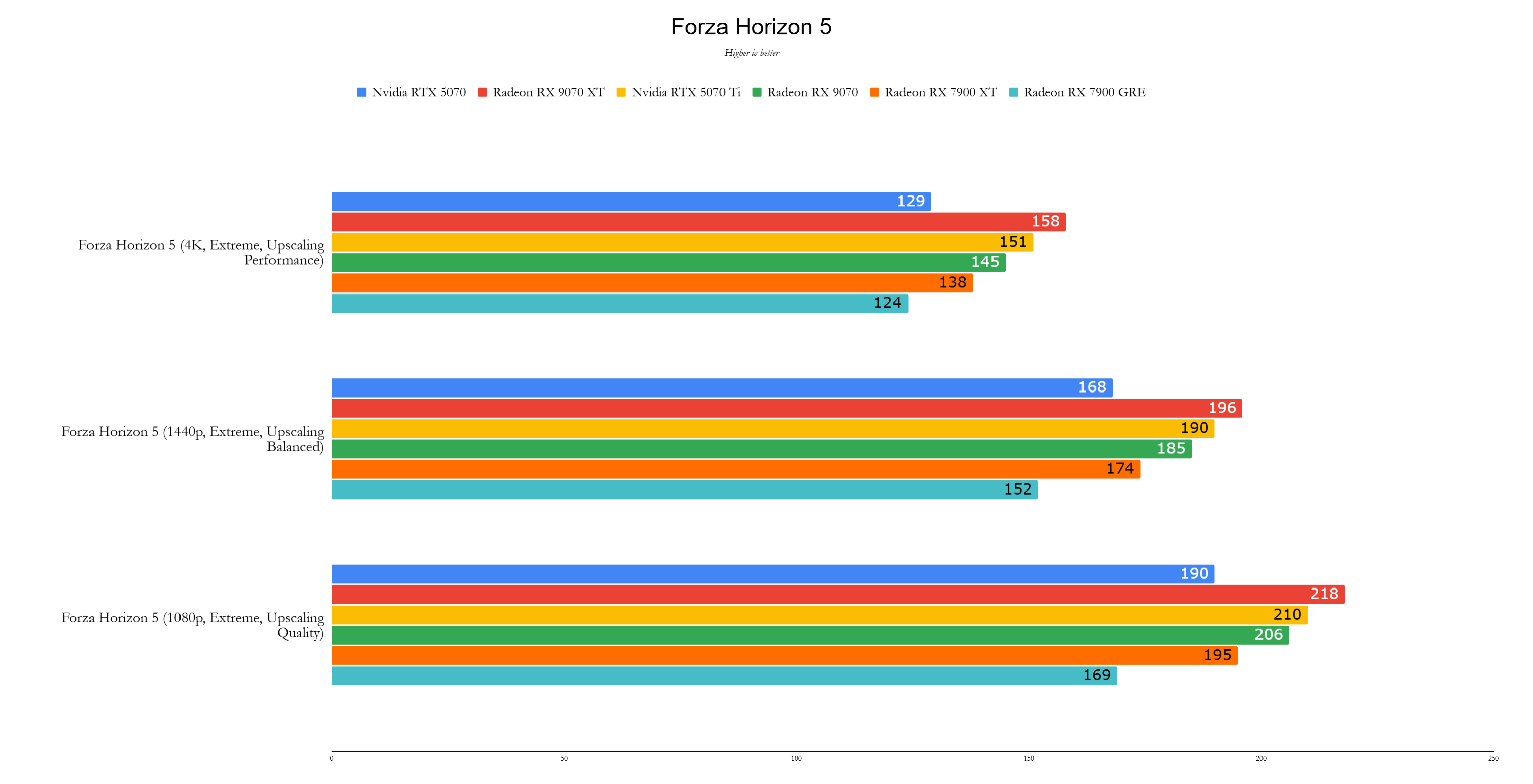
The Radeon RX 9070 XT delivers impressive performance. At $599, it's 21% cheaper than the RTX 5070 Ti while being, on average, 2% faster. While the RTX 5070 Ti wins in some titles, the overall competitiveness is a significant win for AMD. Across my tests, the RX 9070 XT was 17% faster than the RX 7900 XT and 2% faster than the RTX 5070 Ti. Its 4K performance, especially with ray tracing, is exceptional.
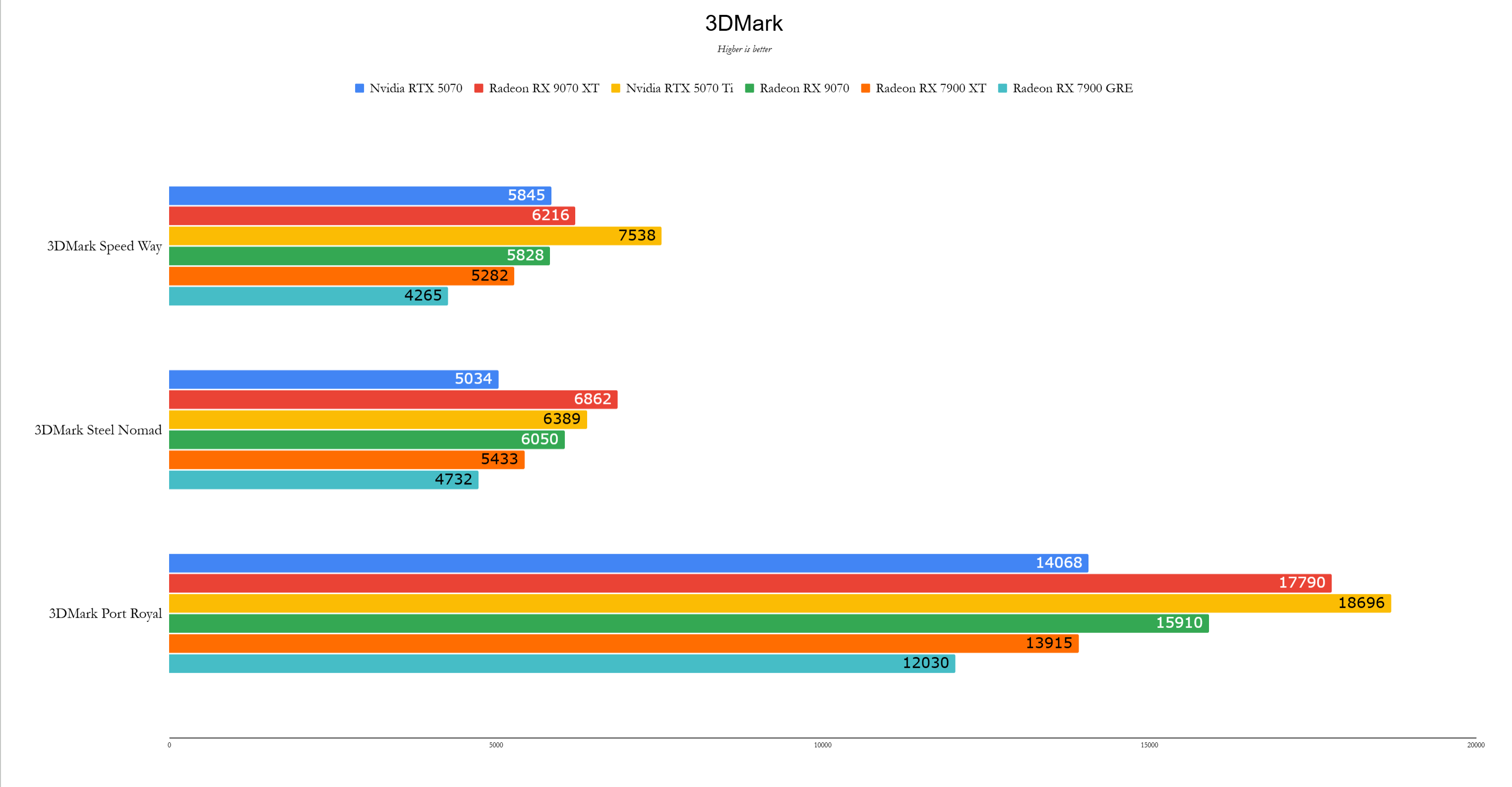
Testing was conducted using the latest drivers: Game Ready Driver 572.60 for Nvidia (except for the RTX 5070, which used review drivers), and Adrenalin 24.12.1 for AMD (except for the RX 9070 XT and RX 9070, which used pre-release drivers). 3DMark results, while not directly representative of in-game performance, provide a useful comparison. The 9070 XT outperformed the 7900 XT by 18% in Speed Way and by 26% in Steel Nomad, even surpassing the RTX 5070 Ti by 7% in the latter.
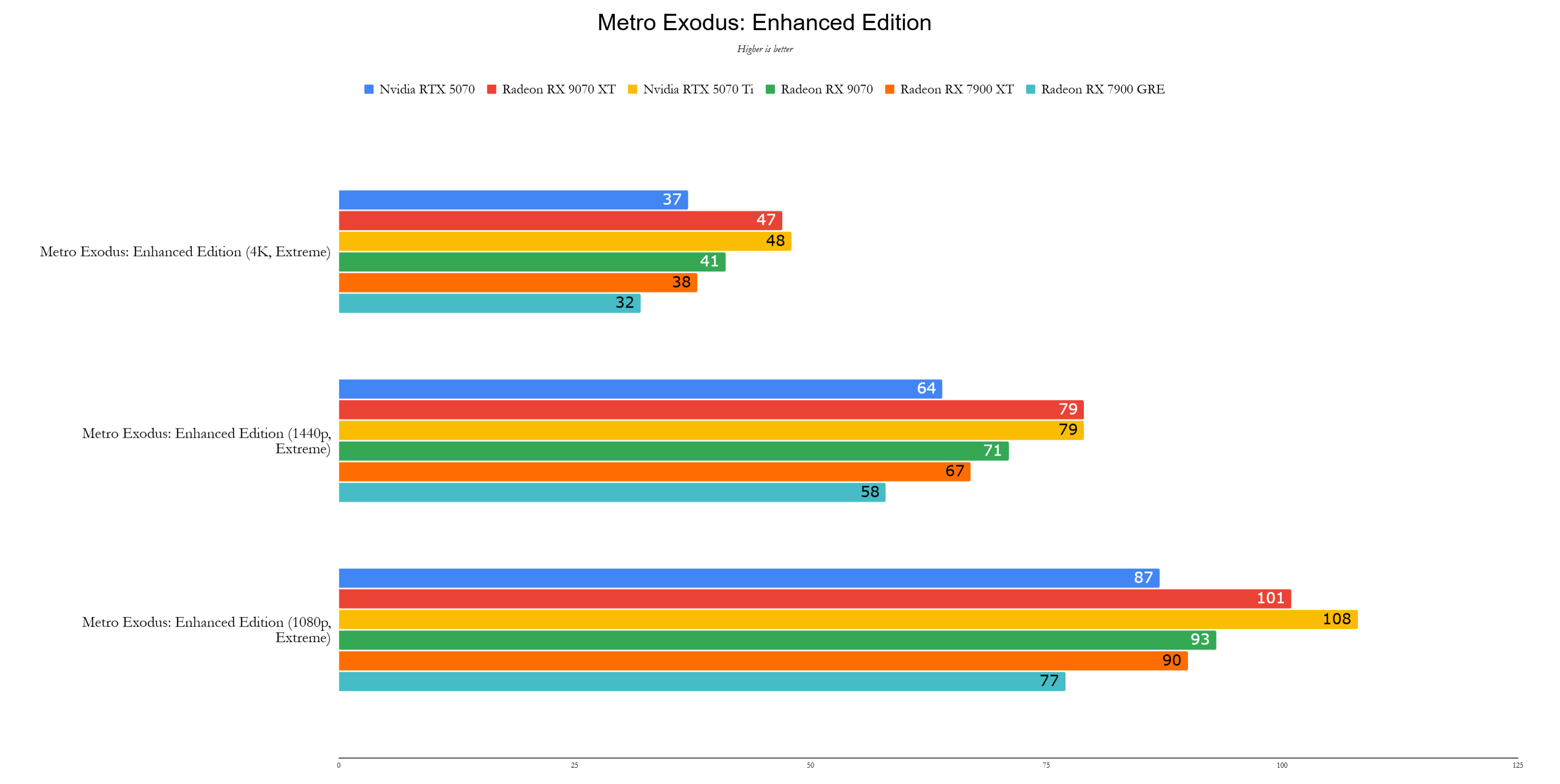
In *Call of Duty: Black Ops 6*, the RX 9070 XT led the RTX 5070 Ti by 15%. *Cyberpunk 2077*, traditionally an Nvidia stronghold, showed a smaller margin of victory for the 5070 Ti (5%). *Metro Exodus* (4K, ray tracing, no upscaling) saw the RX 9070 XT achieve 47 fps, nearly matching the RTX 5070 Ti's 48 fps. *Red Dead Redemption 2* showcased strong Vulkan performance, with the RX 9070 XT achieving 125 fps at maximum settings. *Total War: Warhammer 3* was a less favorable matchup, with the RX 9070 XT trailing the RTX 5070 Ti by 13%. *Assassin's Creed Mirage* saw the RX 9070 XT outperform both the RTX 5070 Ti and the 7900 XT. *Black Myth: Wukong* was a surprising win for AMD, with the RX 9070 XT outperforming the RTX 5070 Ti by 8% in 4K with ray tracing. Finally, *Forza Horizon 5* showed a 5% lead for the RX 9070 XT.
The Radeon RX 9070 XT's performance at $599 represents a welcome shift in the graphics card market. While not as powerful as the RTX 5080 or 5090, its price and performance make it a compelling choice for most gamers. It feels like a return to a flagship value proposition last seen with the GTX 1080 Ti.
Test System:
- CPU: AMD Ryzen 7 9800X3D
- Motherboard: Asus ROG Crosshair X870E Hero
- RAM: 32GB G.Skill Trident Z5 Neo @ 6,000MHz
- SSD: 4TB Samsung 990 Pro
- CPU Cooler: Asus ROG Ryujin III 360
Related Articles
AMD Radeon RX 9060 XT Confirmation Revealed
AMD has unveiled the Radeon RX 9060 XT at Computex 2025, following the successful launch of the RX 9070 XT in March. Despite the anticipation, Team Red has kept details about this mid-range graphics card under wraps.
The AMD Radeon RX 9060 XT boasts 32 Compute Units and is equipped with a robust 16G
Best Deals on AMD Radeon RX 9070, 9070 XT Prebuilt Gaming PCs Starting at $1350
The much-anticipated AMD Radeon RX 9070 and RX 9070 XT graphics cards have hit the market, yet, like their Nvidia counterparts, they're in short supply at retail prices. Fear not, as these GPUs are readily available within prebuilt gaming PCs at reasonable prices. These new releases stand as the mid
Best Buy Debuts AMD Radeon RX 9070, 9070 XT PCs
Skytech Lian-Li O11 Vision AMD Ryzen 7 7700 RX 9070XT Gaming PC (32GB/1TB)$1,879.99 at Best BuyCyberPowerPC Gamer Supreme AMD Ryzen 9 9900X Radeon RX 9070 XT Gaming PC (32GB/2TB)$2,069.99 at Best BuyCyberPowerPC Gamer Supreme AMD Ryzen 7 9700X RX 907
"AMD Zen 5 Gaming CPUs Restocked: 9950X3D, 9900X3D, 9800X3D Now Available"
If you're considering joining the AMD community for your next computer upgrade, the timing couldn't be better. Alongside the Ryzen 7 9800X3D, which was launched earlier this year, AMD has now introduced two premium Ryzen 9 processors in the Zen 5 "X3D" lineup: the 9950X3D priced at $699 and the 9900
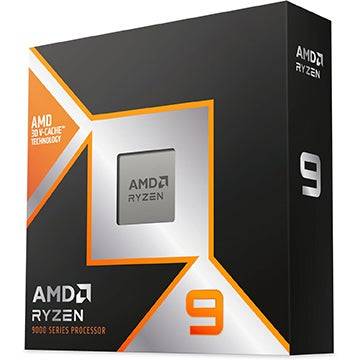
AMD Zen 5 9950X3D, 9900X3D, 9800X3D CPUs Now Available for Gaming
If you're considering joining the AMD family for your next computer upgrade, you're in luck. AMD has recently unveiled two high-end additions to its Zen 5 "X3D" lineup: the Ryzen 9 9950X3D priced at $699 and the Ryzen 9 9900X3D at $599. These processors, alongside the earlier released Ryzen 7 9800X3
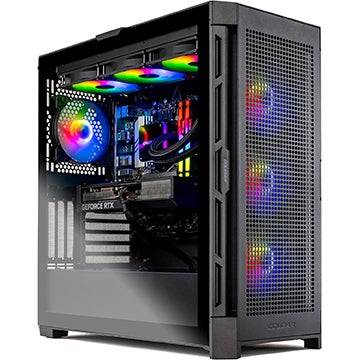
AMD Radeon RX 9070 XT Gaming PC Price Slashed by Amazon
Amazon is currently offering an unbeatable deal on a prebuilt gaming PC equipped with the AMD Radeon RX 9070 XT. You can grab the Skytech Blaze4 RX 9070 XT gaming PC for just $1,599.99, thanks to a $100 instant discount. This is a fantastic price for a system featuring a newly released GPU that comp
Latest Articles

Humblets: Cozy Co-op Adventure Revealed for PC
Developer Berry Bite and publisher HypeTrain Digital have unveiled Humblets, an upcoming cozy cooperative adventure for PC. Set within a charming procedurally generated world, the game promises vibrant landscapes, cute companion pets, and a magical c
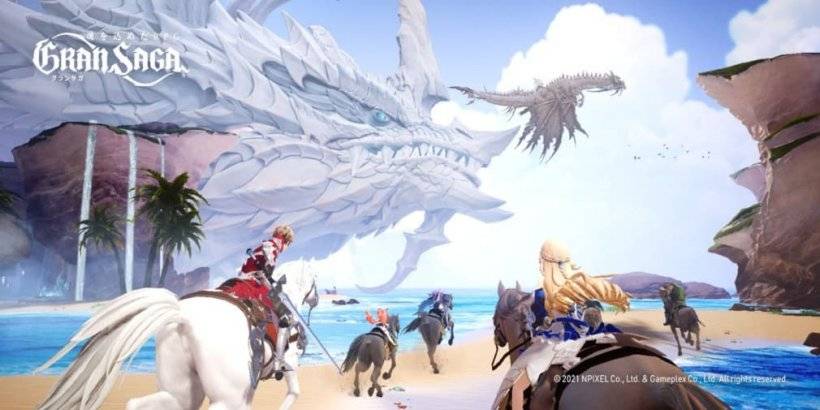
Gran Saga shuts down next month
Gran Saga Announces Official ShutdownNPIXEL has confirmed Gran Saga will cease operations permanently on April 30th, 2025. The developers have already disabled in-app purchases and downloads ahead of the closure.A Brief International RunAfter launchi

Snowbreak adds Vidya - Celestial Swan in Fragments of Truth update
Expand your team with Vidya - Celestial SwanDiscover new costumes and gameplay optionsExperience the enhanced Spectral Fantasies eventFollowing the Abyssal Dawn update, Seasun Games introduces "Fragments of Truth" to Snowbreak: Containment Zone, brin

Worms-Style Ballistic Hero VNG Launches in Anime Universe
Ballistic Hero VNG offers a fresh take on the classic Worms-style formula.Annihilate your enemies (or friends) with a vast arsenal of outrageous weapons.Unlock exciting new loadouts and limited-edition skins, or design your own unique fighter.When it
Fortnite's Top Female Character Skins
Fortnite, Epic Games' groundbreaking battle royale, has captured massive appeal not just for its exciting gameplay but also for its constantly expanding assortment of character outfits. Female skins, in particular, are celebrated for their fashionabl

Firefighting Sim Emergency Call 112 Launches on Android
Emergency Call 112 – The Attack Squad arrives today on Android. Published by Aerosoft and developed by Crenetic, this game plunges you into the life of a firefighter. It was first released for PC in December 2023.What Are the Features?In the mobile e
Latest Games

Acquainted
Casual丨115.01M


One Day at a Time
Casual丨907.00M

Nemurimouto (v0.07)
Casual丨126.20M

Crazy Balls
Puzzle丨73.90M

3D Pinball
Puzzle丨8.00M

My Gilfiend’s Fiends
Casual丨2007.20M










Top News
MORE +

01
02-03
Roblox: Anime Adventures Codes (January 2025)
Anime Adventures Codes: A Comprehensive Guide to Free Gems and Rewards
This guide provides an up-to-date list of working and expired Anime Adventures codes in Roblox. Redeeming these codes grants valuable in-game gems and other rewards, giving you a head start in your adventure.
Updated January 5,
02
05-26
Enhance Your MU Immortal Experience with BlueStacks Features
MU Immortal captures the essence of classic MMORPG gameplay that fans adore—leveling up, enhancing stats, and crafting your ideal character. Designed primarily for mobile, the game truly shines when played on a PC using BlueStacks, thanks to an array of tools that streamline and enhance your gaming
03
05-16
"Clair Obscur: Expedition 33 Hits 1 Million Sales in 3 Days"
Clair Obscur: Expedition 33 has taken the gaming world by storm, achieving a phenomenal opening weekend by selling over 1 million copies just three days after its launch. This remarkable feat cements its status as the highest player-rated game of early 2025. Dive deeper into the journey of this grou
04
04-21
Roblox Anime Genesis: January 2025 Codes
Dive into the thrilling world of Anime Genesis, a dynamic tower defense game on Roblox where you assemble a squad of your favorite anime characters to fend off menacing monsters. Whether you're tackling levels solo or teaming up with friends, you'll earn gems that you can use to summon new heroes, e
05
01-20
New DLC and Preorder for FANTASIAN
FANTASIAN Neo Dimension: DLC and Pre-order Information
While anticipation for extra content is high, a FANTASIAN Neo Dimension DLC or story expansion is unlikely. Mistwalker head Hironobu Sakaguchi has stated his preference against sequels, aiming for complete, self-contained gaming experiences.
Topics
More +